
6 Tips to Improve Slow & Lyrical Selections
Dec 01, 2025
Estimated Read Time: 5 minutes
By Rob Chilton
Slow and lyrical selections often look easy, but they’re anything but. In my early years of teaching, I struggled with them. Every attempt ended in a performance that was too noisy, too choppy, and far from the musical or emotional depth I had hoped for. I soon began avoiding them altogether. In time, I started to understand what was missing and began regaining my confidence. Here are six easy tips you can use to make your next slow selection a more rewarding experience!
1. Play Through the Notes, Not at the Notes
Like drawing a smooth line through a series of dots, the goal is to create a continuous, horizontal phrase through the notes—but young musicians often struggle with this concept. They tend to play at the notes, not through them. Here’s an easy way to illustrate the idea:
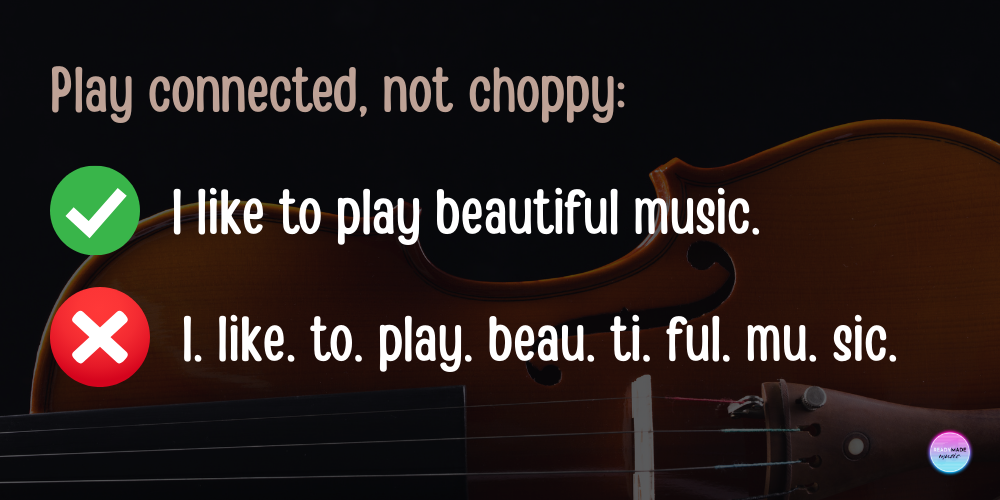
Read this aloud in your natural speaking voice:
✅ I like to play beautiful music.
Now read it again, but emphasize every syllable:
❌ I. like. to. play. beau. ti. ful. mu. sic.
You can understand the meaning of both sentences, but the first sounded more natural, right? That’s because in the first, you passed continuously through the sentence, directing your flow toward the final period. In the second, you emphasized every syllable—breaking your flow, even if the sound was connected. Similarly, in music, we shouldn’t play note by note, but from the start of a phrase to its end. More simply, I tell my students: play connected, not choppy.
2. Play Longer on a Single Breath
Students often breathe out of habit and convenience—not necessity. This leads to frequent or even excessive breathing, which can make lyrical music sound choppy. One of my favorite ways to help them overcome this and play longer on a single breath is with a quick challenge I call "Last Man Standing."
Ask everyone to stand and play a passage together, going as far as they can in a single breath. One by one, when they finally breathe, they should stop playing and sit down. The passage continues until we find the person that went the furthest on a single breath—the last man standing. This is a fun, low-pressure way to show them they’re capable of going much further in a single breath, and most are surprised how far they can go!
Afterward, explain that playing a wind instrument or singing is essentially a controlled breath-holding exercise. Like holding your breath underwater, your brain starts sending you signals to breathe long before your body actually needs air. Put more simply, when you think you’re out, you’re usually still about halfway full. You don’t need to breathe yet—your brain is just telling you it’s almost time to.

3. Use Staggered Breathing
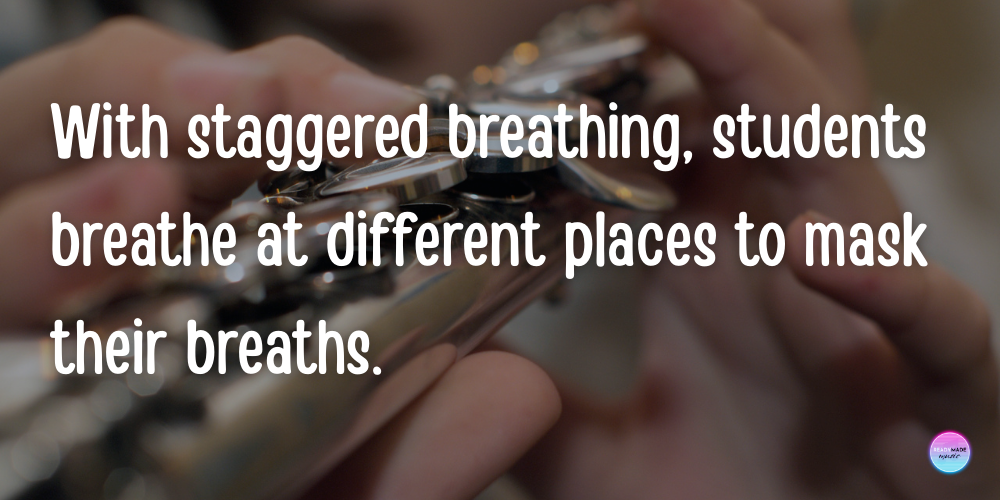
Along with playing longer on a single breath, I recommend teaching students to stagger their breathing. This is where they breathe at different places to mask their breaths, creating a more smooth and seamless performance.
If it’s your first time teaching staggered breathing to a group, you can start by assigning everyone to either an A or B group. Then, assign different places for each group to breathe. As your students mature in their understanding and execution of staggered breathing, you can begin putting more ownership on them to figure out their own breathing assignments.
4. Articulate Lighter
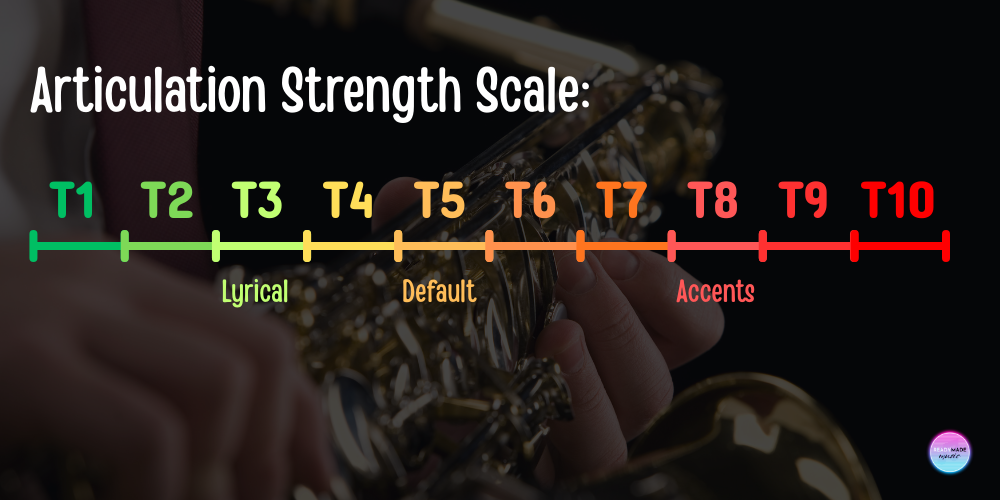
Slow and lyrical music calls for a more delicate approach to articulation. I use a numbered scale with my students, where T1 is the most light and gentle articulation and T10 is the most firm and accented. (The letter “T” stands for “tongue.”) I generally use T5 as our default strength, and suggest T3 in lyrical music, unless there’s a specific marking, such as an accent, indicating otherwise—but you can assign whatever numbers you prefer. The point is that a numbered scale helps students understand nuance and develop degrees of articulation strength.
Check out our music literacy method!

5. Fixing Loud and Noisy
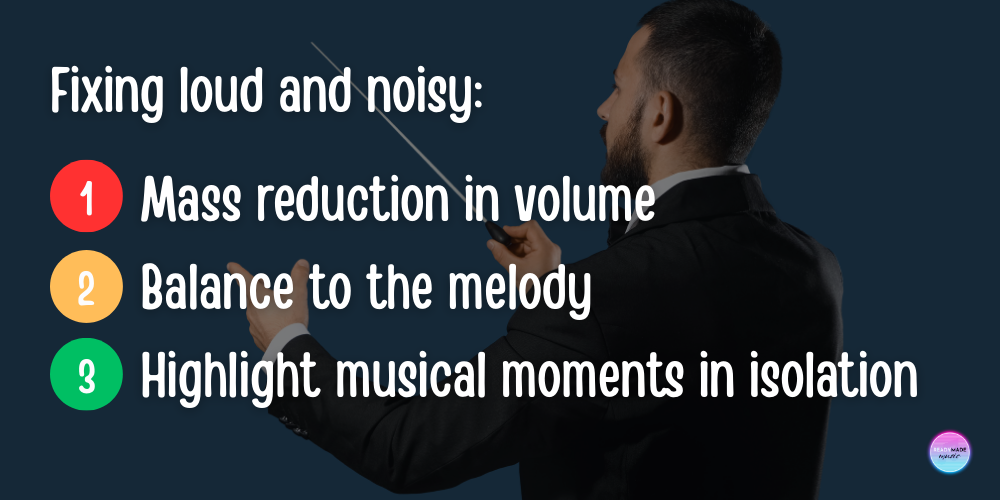
Here’s an easy three-step troubleshooting process to fix loud and noisy:
- Mass Reduction in Volume - Ask everyone to play one dynamic level softer—or 20% softer. This can be helpful in reducing noise and creating a calmer sound.
- Balance to the Melody - Pick a passage and have the melody play by themselves. Then, gradually layer in the non-melodic lines at volumes significantly lower than the melody. Music sounds noisy when every part is played with equal volume and importance. It’s like being in a crowded room where everyone’s talking at once—you can hear the noise, but struggle to narrow in on any particular conversation.
- Highlight Musical Moments in Isolation - Sometimes a non-melodic line will briefly feature a small “musical moment.” This is my term for a short motif or counter-line that deserves attention. Instead of asking students to play the entire passage louder, have them mark that isolated musical moment in parentheses and play it about 10–25% louder than the surrounding passage. This allows them to highlight their moment while not overdoing everything else.
6. Teach Them How to Watch & Read Your Conducting
A performance can quickly unravel if your students aren’t watching your conducting. But for our conducting to be effective, they need to first know how to watch and what to watch for.
How to watch:
- Direct Watching - This is using your eyes to look up from the music and connect with the conductor. This can be done anytime, but there are key moments when it matters most, such as the beginning of measures (beat 1), at rehearsal marks (boxed measure numbers or letters), during tempo changes (accelerando, ritardando, or rubato), and when entering after a long rest (to catch a cue).
- Peripheral Watching - This is using your side vision to watch at all times when you’re not watching directly. Students should position their music stands so they’re in a direct path with the conductor, and raise them high enough that they can see the beat while still looking at their music.
What to watch for:
- The Ictus - This is the precise point in a conducting gesture that indicates the beat. It’s the moment when the baton stops traveling downward and rebounds upwards. Knowing where the ictus is helps students receive the beat we’re communicating.

Final Thoughts
Lyrical tunes are often much harder than they look. When selecting one, I’ll often go with a grade level or more below where we normally play—especially with younger students. For example, if my middle school band is capable of playing a Grade 3 in a technical selection, my target for a lyrical selection is usually around a Grade 1.5-2.
And, if you’re thinking about playing a lyrical selection for a contest, start with an easier one earlier in the year so you can teach all the things with less pressure before passing out something that will be performed for an evaluation.
Related post:
Never miss a new posting!

Check out this short video!

About the author:

Rob Chilton is the creator and owner of Readymade Music, LLC and its content. Previously, Chilton was a middle school band director from 2007-2021. His most recent teaching position was the Head Band Director at Killian Middle School in Lewisville, Texas from 2014-2021.
Under his direction, the Killian Honors Band was named the 2018 Texas Music Educators Association CC Honor Band and performed at the annual 2018 TMEA Clinic/Convention. In 2019, the Killian Honors Band was invited to and performed at The Midwest Clinic in Chicago. Additionally, the Killian Honors Band was named a National Winner in the Mark of Excellence National Wind Band Honors Project in 2015, 2016, 2017, 2018, and 2019.
Chilton is a graduate of Southern Methodist University where he had the opportunity to study music education under the tutelage of Lynne Jackson and Brian Merrill. During his years as a middle school band director, Chilton continued his professional growth under the guidance of his primary clinicians, John Benzer and Brian Merrill.
Chilton’s mission for Readymade Music is to promote the overall well-being of music education and support school music teachers by providing solutions to help make teaching music more efficient and inspirational while increasing engagement for 21st century learners.

© 2025 Readymade Music, LLC
All rights reserved.
The unauthorized distribution and/or reproduction of this work is illegal.
